
"Ty is the best! Handles everything with immense care, packs extremely well, and ships quickly! Highly recommend."

Description
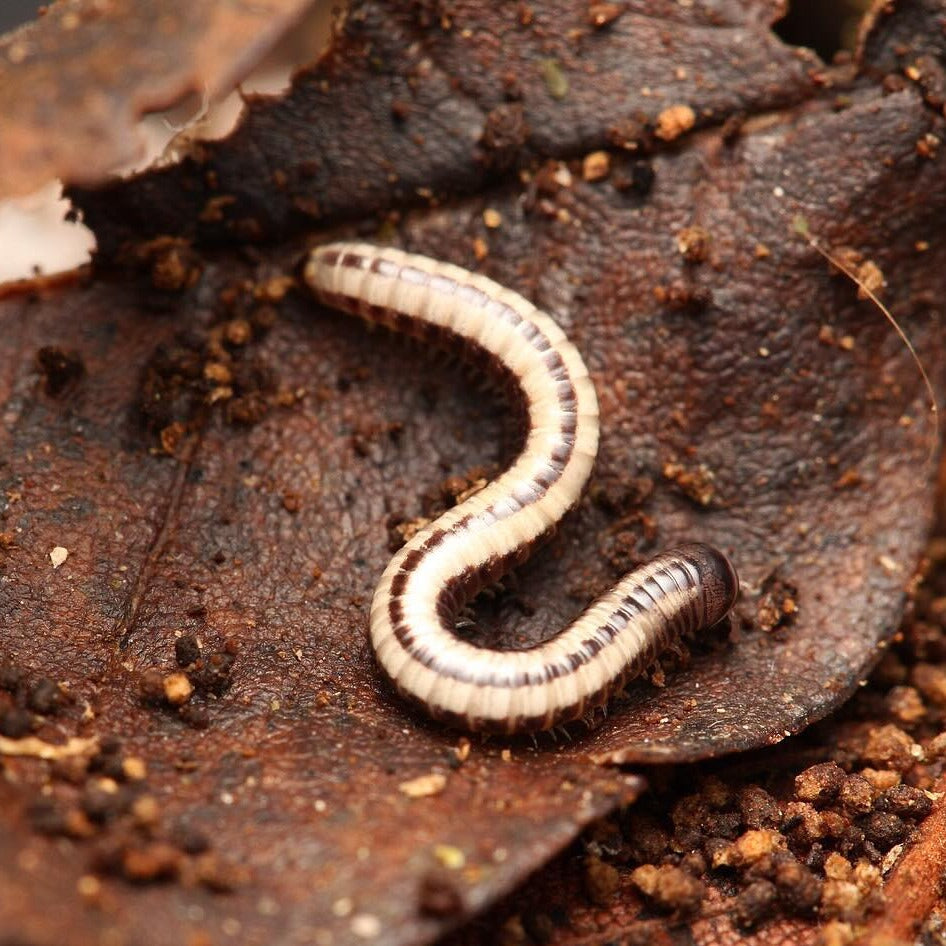
The Spirobollelus immigrans, commonly known as the Maui Skunk Striped Millipede, is a beautiful and fascinating small millipede species featuring striking skunk-like striped patterns and an amazing blacklight glow. This attractive millipede displays bold black and white striped coloration reminiscent of a skunk, and glows brilliantly under UV/blacklight, creating a stunning appearance that makes it one of the most visually distinctive and sought-after millipedes from Hawaii.
Native to Maui, Hawaii, this small species reaches a size of 1–2 inches at maturity. These millipedes appreciate a very moist environment with lots of white rotten wood and leaf litter to thrive. Known for its beautiful skunk-like striped patterns, spectacular blacklight fluorescence, small compact size, bold black and white coloration, hardy nature, unique Hawaiian island biogeography, and fascinating care requirements, the Maui Skunk Striped Millipede is a prized specimen for keepers who appreciate small millipedes with striking patterns and amazing UV-reactive properties.
Key Features:
- Glows brilliantly under UV/blacklight!
- Beautiful skunk-like black and white striped patterns
- Small compact size reaching 1–2 inches in length
- Bold and striking coloration
- Native to Maui, Hawaii
- Unique Hawaiian island species
- Appreciates very moist environment
- Thrives on white rotten wood and leaf litter
- Hardy species with specific care requirements
- Peaceful and handleable
- Fascinating biogeography and UV properties
- Great for beginners and experienced keepers
- Beginner care level
- Live arrival guarantee with safe, discreet shipping
Perfect for keepers seeking a beautiful small millipede with stunning skunk-striped patterns, amazing blacklight glow, and unique Hawaiian island origin. Provide a very moist environment with plenty of white rotten wood and leaf litter for optimal health. Each specimen is ethically sourced and comes with comprehensive care information to ensure long-term success with this gorgeous Maui species.
Photo credit to Carlos Michaelsen
Overall rating: 5.0 / 5 from 1 reviews.
AI Generated Review Summary
Summary topics
Review topics: [].
