


Description
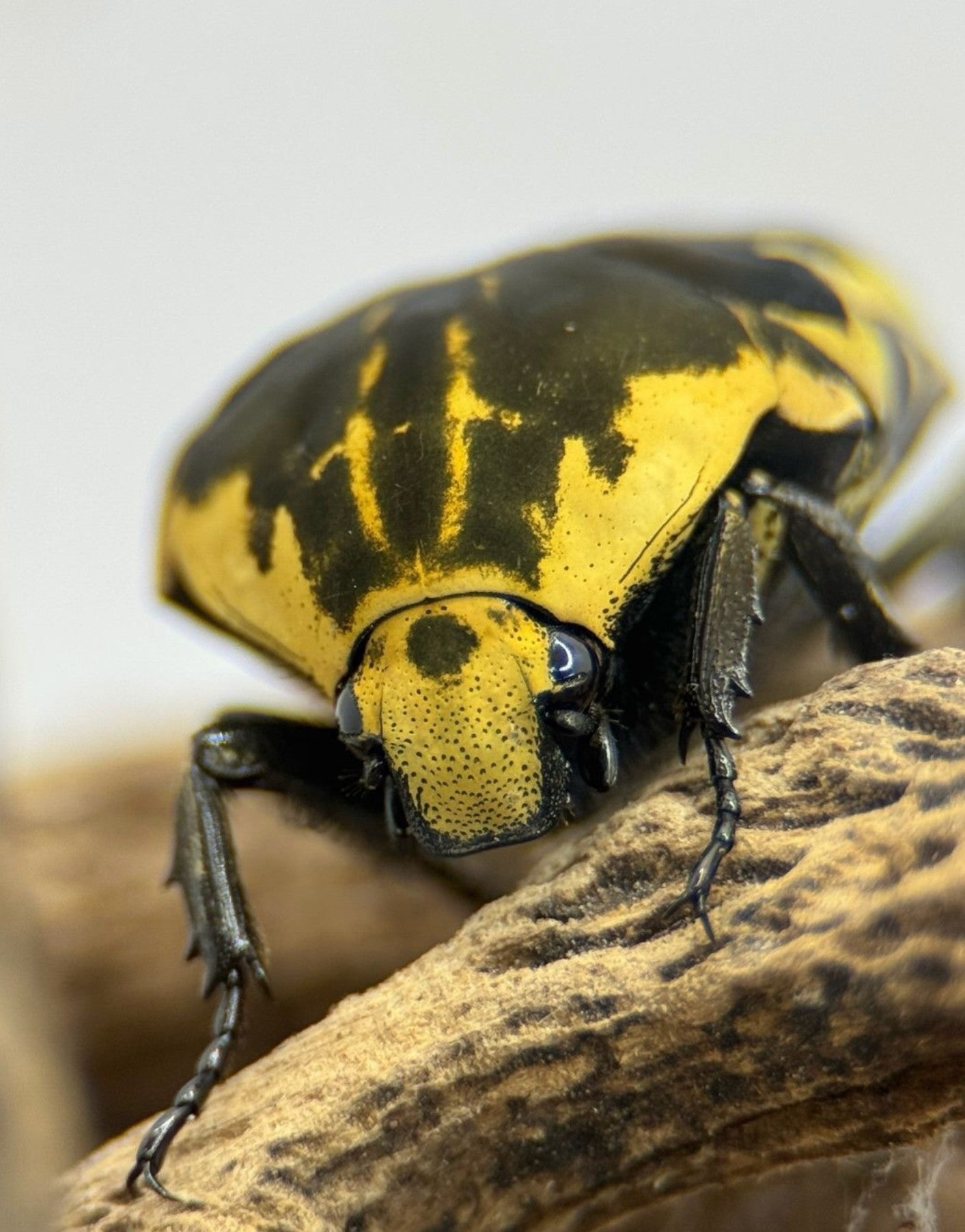
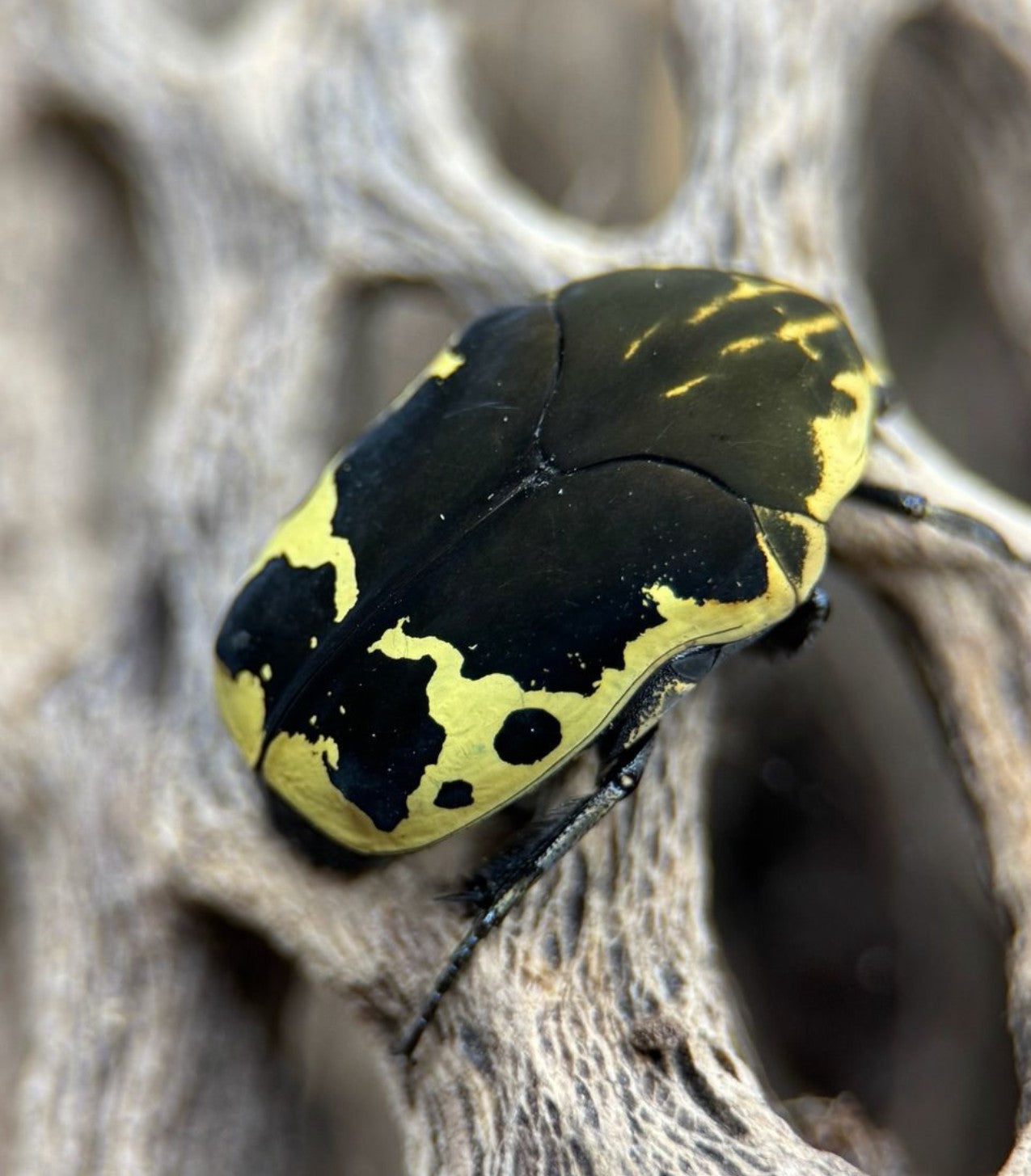
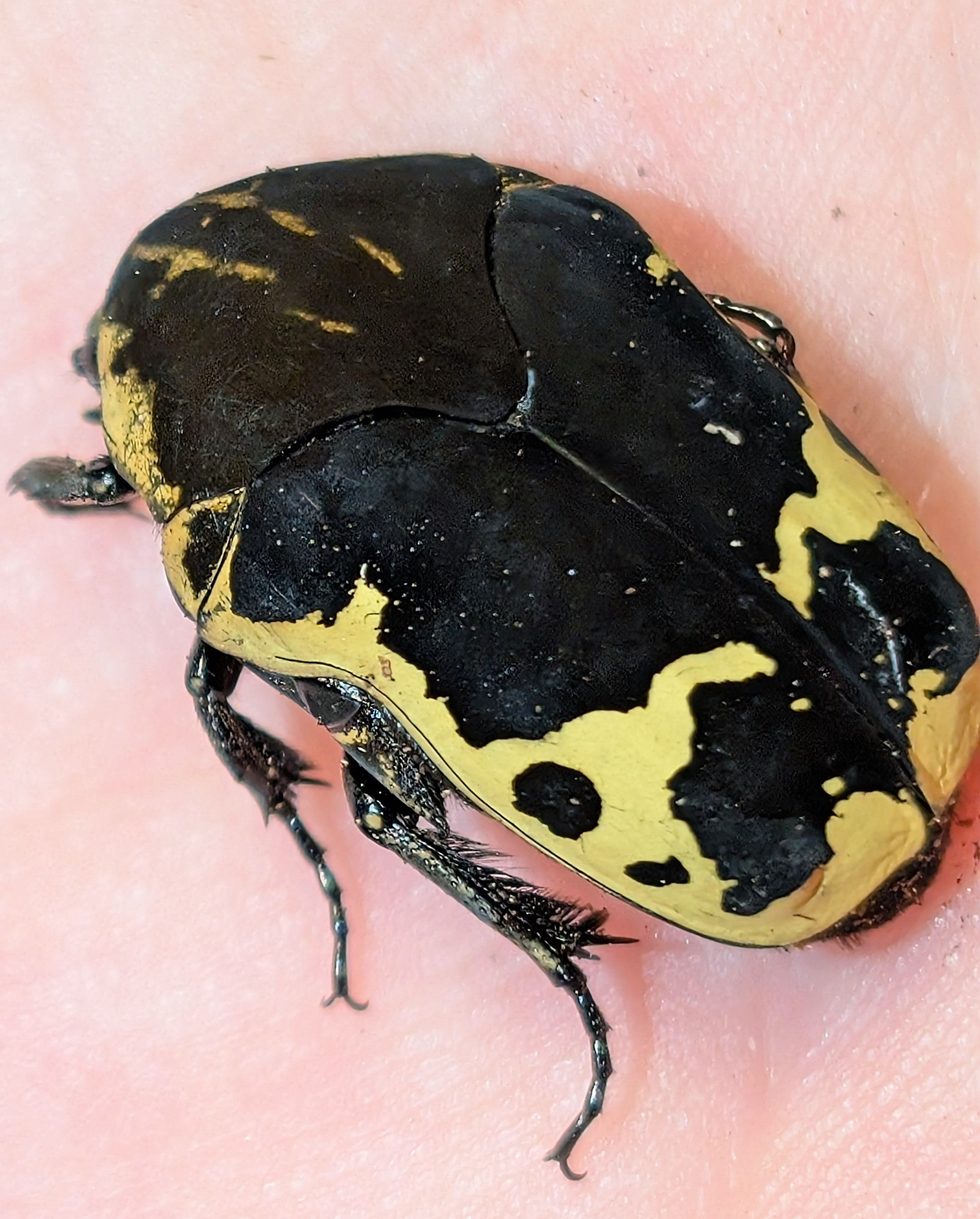
Gymnetis thula — the Harlequin Flower Beetle — is one of North America’s most charismatic and visually dynamic beetles, and a species that genuinely surprises keepers with how interactive and rewarding it is to maintain. Boldly patterned in cream, black, and yellow, these beetles are named for their striking harlequin-style markings — and they live up to the name completely.
One of the most fascinating traits of G. thula is their color-shifting coloration: adults kept in drier conditions display a brighter, more vivid yellow, while those maintained in higher humidity shift toward a deeper green tone. This means your husbandry choices directly influence the appearance of your beetles — a feature that makes them endlessly interesting to experiment with and photograph.
Adults are fruit feeders, eagerly taking soft ripe fruits, beetle jelly, and sugar-rich foods. Larvae are raised on an isopod-grade substrate topped with leaf litter — a rich, organic mix that mimics the forest floor environment where this species naturally develops. This setup encourages natural burrowing and feeding behavior while keeping the enclosure clean and well-conditioned.
Native to North America, G. thula is a legal, accessible, and underappreciated gem in the beetle hobby — perfect for keepers looking to branch into flower beetles without sourcing exotic imports.
Care Highlights
- Temperature: 72–82°F; warm room temperature conditions work well
- Humidity: Moderate — drier conditions produce brighter yellow adults; higher humidity shifts coloration toward green
- Larval Substrate: Isopod-grade substrate with leaf litter added on top; larvae feed on decomposing organic matter
- Adult Feeding: Ripe soft fruits (banana, mango, peach), beetle jelly, and sugar-based foods
- Enclosure: Well-ventilated enclosure with deep substrate for larvae; adults are strong fliers — secure lid essential
- Experience Level: Beginner to Intermediate — hardy, rewarding, and great for new beetle keepers
A Live Arrival Guarantee is included with every purchase. In the unlikely event of a DOA, photo and video documentation of the specimen in original packaging is required to process a claim.
