

Description
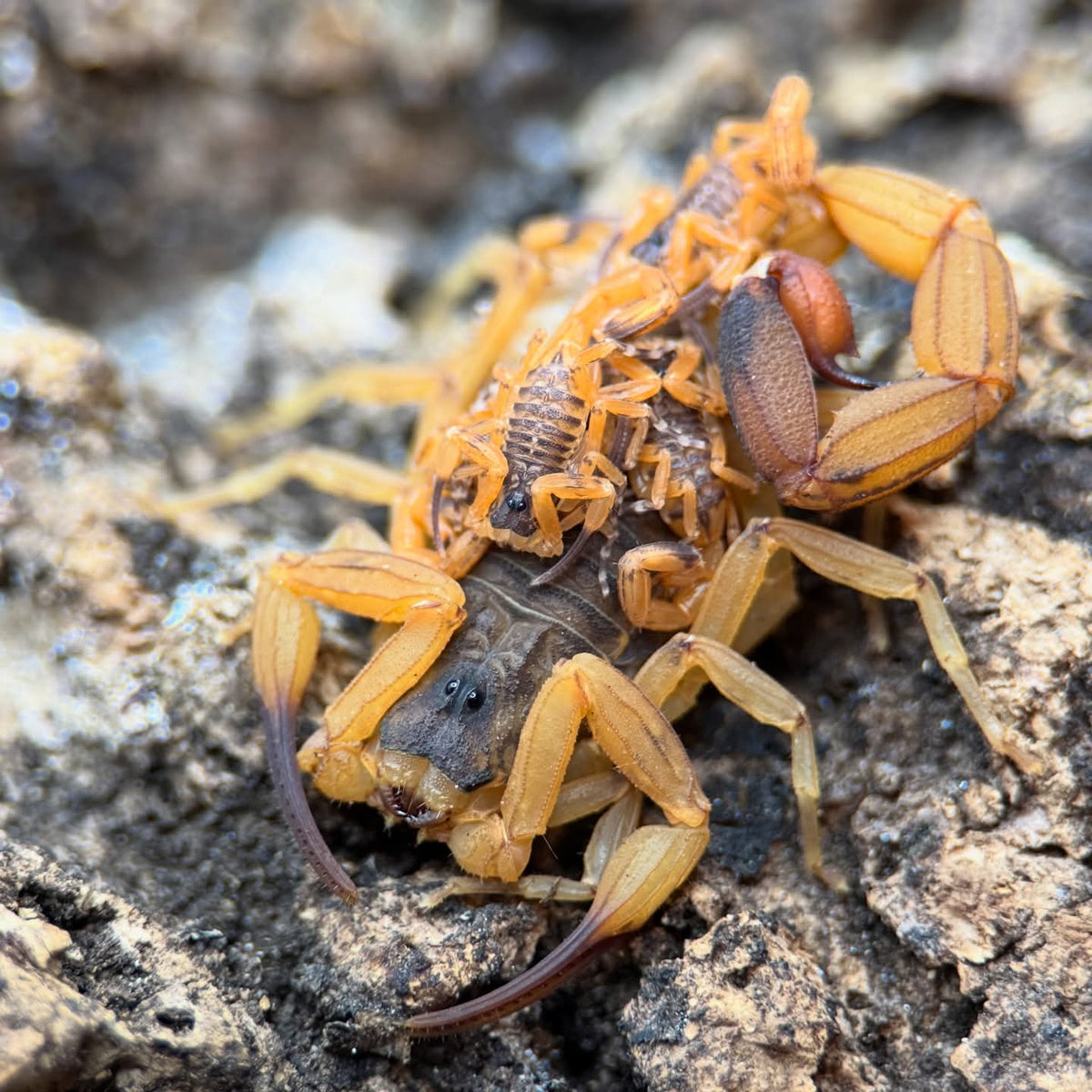
Tityus serrulatus — the Brazilian Yellow Scorpion — is one of the most scientifically remarkable and collectible scorpions in the hobby. Despite its common name, this species displays a rich warm orange coloration rather than a true yellow — vivid, saturated, and striking under any lighting. Native to Brazil, it combines an extraordinary set of traits that make it a standout for serious collectors: it is communal, parthenogenic, and medically significant — a trifecta rarely found in a single species.
What truly sets T. serrulatus apart is its ability to reproduce via parthenogenesis — females can produce viable offspring without a male. A single female can seed an entire colony, making this species uniquely self-sustaining and a dream for breeders. In the wild they are found in communal aggregations, and in captivity they can be housed in groups with appropriate space and feeding management.
Their warm orange coloration with active, alert demeanor makes them compelling display animals. That said, this is a species that demands respect — T. serrulatus is considered medically significant, with venom potent enough to cause serious symptoms, particularly in children or immunocompromised individuals. Experienced keepers only.
Care Highlights
- Temperature: 78–88°F; warm and stable year-round
- Humidity: Moderate — 70–80%; slightly moist substrate with good ventilation
- Enclosure: Communal setups possible with adequate space, hides, and regular feeding; escape-proof lid essential
- Feeding: Crickets, roaches, and other appropriately sized prey; feed individually if aggression is observed
- Reproduction: Parthenogenic — females reproduce without males; livebearing with maternal care of young
- Experience Level: Advanced — medically significant venom; not a handling species
⚠️ Warning: This species is medically significant. Its venom can cause serious medical reactions. This animal is sold strictly for experienced keepers for display and educational purposes only.
A Live Arrival Guarantee is included with every purchase. In the unlikely event of a DOA, photo and video documentation of the specimen in original packaging is required to process a claim.
